
Las Vegas Bail Bonds for Drug Possession, Intent to Sell, and Temporary Bail Decisions

1. Las Vegas Bail Bonds for Drug Possession and Intent-to-Sell Charges
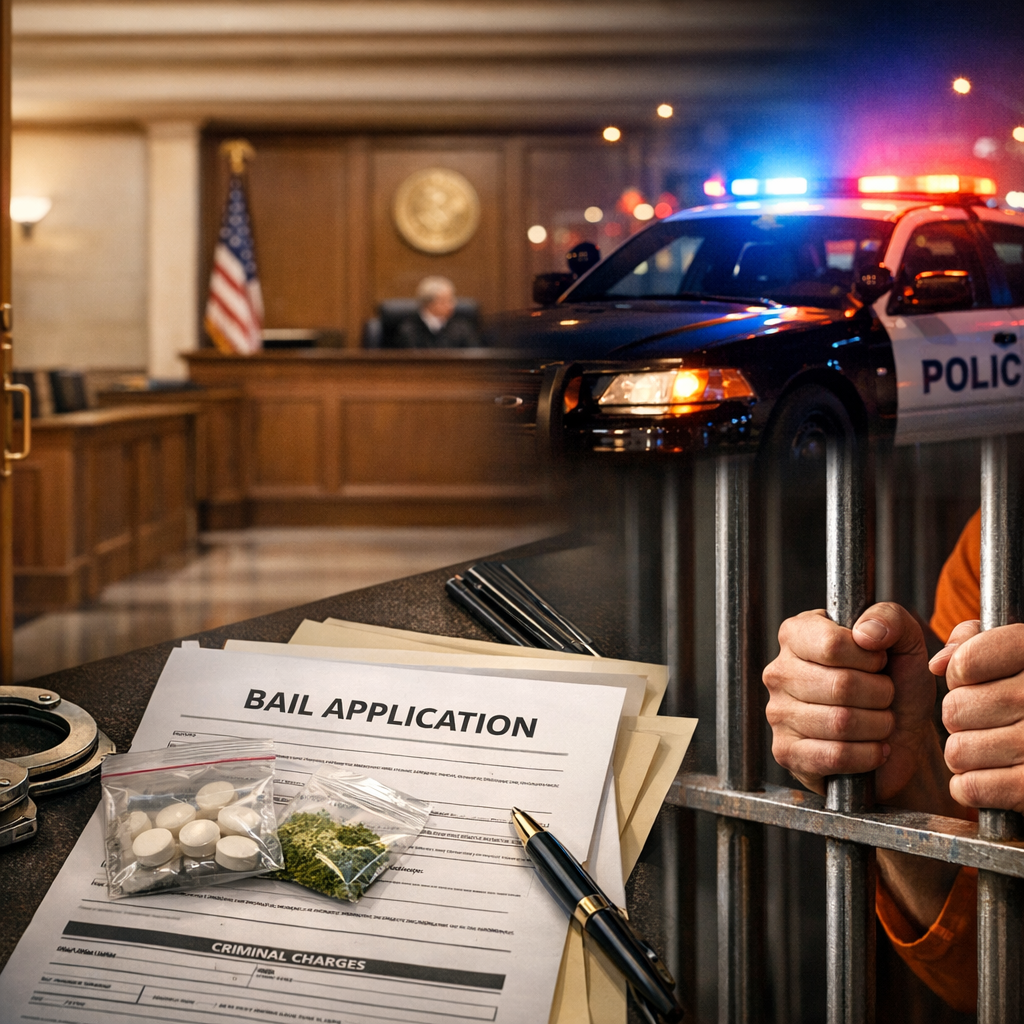
Drug-related arrests in Las Vegas can create immediate uncertainty for defendants and their families. Whether someone faces a simple possession allegation or a more serious charge involving possession with intent to sell, the first concern is often the same: How can the person get out of jail while the criminal case moves forward?
Understanding Las Vegas bail bonds for drug possession cases can help families respond quickly and prepare for the decisions that follow an arrest. Nevada courts consider several factors when determining whether someone may be released, what conditions apply, and whether financial security is necessary.
Drug arrests may involve controlled substances such as methamphetamine, cocaine, heroin, fentanyl, or unlawfully possessed prescription medications. The specific charge depends on the circumstances, applicable Nevada statutes, and the allegations made by law enforcement.
Importantly, an arrest does not establish guilt. Bail and pretrial release decisions generally address whether a defendant can remain in the community while the case is pending, rather than deciding the underlying criminal allegations.
For families dealing with an unexpected arrest, contacting a local bail bond professional can help clarify available payment arrangements, bonding procedures, and the practical steps involved in seeking release.
For assistance with a Las Vegas drug-related arrest, call (702) 450-4000. Early communication can help families organize information while the court and detention facility complete their procedures.
2. Drug Possession vs. Possession With Intent to Sell in Nevada
Not all Nevada drug charges are treated the same. The distinction between possessing a controlled substance and possessing it with the intent to sell can significantly affect the potential criminal penalties and the circumstances considered during a temporary bail decision.
Simple possession generally involves allegations that a person knowingly or intentionally possessed a controlled substance without lawful authorization. Nevada law addresses unlawful possession under NRS 453.336, although the applicable charge and potential consequences depend on the substance, quantity, prior history, and other statutory considerations.
Possession with intent to sell is a different allegation. Under NRS 453.337 and other applicable provisions, prosecutors may pursue charges based on suspected possession for distribution rather than personal use. Investigators may examine circumstances such as packaging, quantities, communications, cash, or other evidence when developing these allegations.
Those circumstances do not automatically establish intent to sell. The prosecution must prove the elements of the charged offense through the criminal process.
For bail purposes, the distinction matters because more serious allegations may lead prosecutors to request stricter release conditions or a higher secured amount. However, the charge alone does not determine every release decision.
A judge may consider the defendant’s history, community connections, prior court appearances, public safety concerns, and other legally relevant information.
Families should avoid assuming that a possession-with-intent allegation automatically prevents release. A licensed bail bond professional can explain the bonding process once the court’s actual release requirements are known.
3. How Temporary Bail Decisions Work in Las Vegas Drug Cases
Temporary bail decisions are among the most important early developments following a Las Vegas drug arrest. These decisions determine whether a defendant may be released before trial and what conditions must be satisfied.
Depending on the circumstances, a defendant may qualify for release without posting financial security, may receive conditions of supervision, or may be required to provide a specified amount of bail. Some cases require additional judicial review before release can occur.
In Clark County, pretrial release procedures can involve initial judicial determinations, court hearings, and assessments of factors relevant to appearance and community safety. The exact process depends on the charge, arrest circumstances, and applicable court procedures.
A temporary bail amount is not necessarily permanent. Courts may later reconsider release conditions when new information becomes available or when an appropriate motion is presented.
Judges may evaluate whether a defendant is likely to appear for future hearings, whether particular conditions can address identified risks, and whether financial security is justified under Nevada law.
Drug-related allegations involving distribution, significant quantities, or accompanying criminal charges may receive closer scrutiny. Nevertheless, each defendant’s circumstances require individual consideration.
Families should also understand that a bail bond company cannot independently set, reduce, or override a judge’s bail decision. The company’s role is to assist with an authorized financial bond after the applicable requirements have been established.
If bail has already been set, calling (702) 450-4000 can help determine what information is needed to begin discussing the bonding process.
4. What Happens Next After Arrest for a Drug Charge?
After a drug-related arrest in Las Vegas, several administrative and judicial steps may occur before a defendant becomes eligible for release. Understanding the general sequence helps families avoid confusion and unnecessary delays.
Step 1: Booking and Identification
The arresting agency transports the individual to an appropriate detention facility. Booking generally involves confirming identity, recording arrest information, collecting identifying information, and completing facility intake requirements.
Step 2: Locating the Defendant
Families may need to determine whether the defendant is held at the Clark County Detention Center, a city detention facility, or another jurisdiction’s facility. Custody records may take time to update after an arrest.
Step 3: Reviewing the Release Status
The next step is determining whether a release amount or other conditions have been established. Certain defendants may require an initial court appearance or additional judicial authorization before a bond can be accepted.
Step 4: Contacting a Bail Bond Agency
If a financial bond is permitted, a licensed bail bond agent can explain the required paperwork, applicable premium, collateral considerations, and responsibilities associated with the bond.
Step 5: Completing Release Processing
After an acceptable bond is submitted, the detention facility must complete its own verification and release procedures. Processing times vary, and payment or bond submission does not guarantee immediate release.
Step 6: Following Court Instructions
Once released, the defendant must follow all court-ordered conditions and appear at required proceedings. Missing a hearing or violating release requirements can create serious consequences.
For help understanding the practical bonding steps after a Las Vegas drug arrest, contact (702) 450-4000.
5. How Much Does a Drug Possession Bail Bond Cost in Las Vegas?
The cost of a Las Vegas drug possession bail bond depends primarily on the amount of financial security required by the court and the premium permitted under Nevada’s bail bond regulations.
A bail amount and a bail bond premium are different. The bail amount is the financial security established through the applicable release process. A bail bond premium is the fee charged by the surety bond provider for arranging an eligible bond.
For example, if a court establishes a $10,000 secured bail amount, the defendant or family may be able to work with a licensed bail bond agency rather than depositing the entire amount directly with the court. The applicable premium and any other lawful requirements should be explained before documents are signed.
Premiums are governed by Nevada’s regulatory framework and applicable approved rates. Families should not assume that every financial arrangement, fee, or payment option is available in every case.
Collateral may also be discussed depending on the circumstances and the agency’s underwriting requirements. Collateral is separate from the premium and may create additional contractual obligations.
Before agreeing to a bond, ask for a clear explanation of payment terms, refund policies, collateral provisions, and the responsibilities of anyone signing as an indemnitor.
It is also important to understand that paying a bail bond premium does not resolve the criminal charge. Court appearances and release conditions remain separate obligations.
Call (702) 450-4000 to discuss the court-set amount, available bonding arrangements, and the information needed to evaluate a Las Vegas drug-related bond request.
6. Nevada Bail Bond Laws: Understanding NRS 697 and NRS 178
Nevada law establishes separate rules for bail bond businesses and judicial release decisions. Two important legal references are NRS 697 and NRS 178.
NRS Chapter 697 addresses the regulation of Nevada bail agents, bail enforcement agents, and related surety bail activities. In plain language, this chapter helps establish who may conduct regulated bail bond business, what licensing requirements apply, and the standards governing those activities.
For consumers, NRS 697 matters because bail bond transactions should be handled through properly authorized professionals operating within Nevada’s regulatory framework.
NRS Chapter 178 addresses criminal procedure, including provisions relevant to pretrial release and bail. These rules help establish how courts evaluate release, impose conditions, and address financial security in criminal proceedings.
In practical terms, NRS 178 concerns the court’s authority and procedures, while NRS 697 concerns the regulated professionals who may assist with qualifying surety bonds.
Neither chapter gives a bail bond agency authority to promise release, change criminal charges, or disregard judicial restrictions.
Nevada drug offenses are addressed separately under statutes including NRS Chapter 453. The existence of a drug charge does not, by itself, establish the outcome of a bail hearing or criminal prosecution.
Release decisions must follow applicable law, constitutional requirements, and the facts presented to the court. Because legal standards and procedures can change, individuals seeking guidance about their rights, eligibility for release, or a particular charge should consult a qualified Nevada criminal defense attorney.
This article provides general public information as of November 10, 2026. It is not legal advice and does not create an attorney-client relationship.
7. Get Local Las Vegas Bail Bond Help for Drug-Related Arrests
When someone is arrested for drug possession or possession with intent to sell in Las Vegas, obtaining reliable information quickly can make the situation easier to manage.
Families often face several questions at once: Where is the defendant being held? Has a temporary bail amount been established? Is a bond currently permitted? What paperwork is needed? How long might release processing take?
A local bail bond professional can help explain the practical side of these questions without replacing the role of the court or a criminal defense attorney.
For local assistance, contact the Las Vegas bail bond office at 629 S Casino Center Blvd, Las Vegas, NV 89101. Call (702) 450-4000 to discuss a drug possession arrest, possession-with-intent allegation, or an existing temporary bail decision.
Having the defendant’s full legal name, date of birth, known detention location, and booking number available may make the initial conversation more productive. If the court has already established a bail amount, provide that information as well.
Before beginning a bond transaction, confirm the agency’s current licensing information, applicable premium, contract terms, and any collateral requirements. Ask about the responsibilities of the defendant and anyone agreeing to guarantee the bond.
Remember that release is controlled by the court’s authorization and the detention facility’s processing requirements. No legitimate bail bond provider can guarantee a particular release time or criminal case outcome.
If a loved one is being held after a drug-related arrest, call (702) 450-4000 to discuss available bail bond assistance in Las Vegas. Understanding the next required step can help your family make informed decisions during an urgent situation.
Frequently Asked Questions
- Can someone get bail for drug possession in Las Vegas?
- Many defendants arrested for drug possession in Las Vegas may be eligible for pretrial release, but eligibility and conditions depend on the specific charges, applicable Nevada law, and judicial decisions. A court may authorize release without financial security, require a secured bond, impose supervision conditions, or order additional review. A bail bond agency can assist with an eligible surety bond after the appropriate release authorization exists.
- Is bail higher for possession with intent to sell than for simple possession?
- Possession with intent to sell generally involves more serious allegations than simple possession, and those allegations may influence a judge’s evaluation of release conditions. However, Nevada courts consider multiple legally relevant factors, including the defendant’s circumstances, court appearance history, and public safety considerations. There is no single bail amount that automatically applies to every possession-with-intent case.
- How quickly can someone be released after posting a bail bond in Las Vegas?
- Release times vary depending on the detention facility, booking status, court authorization, bond verification, staffing, and other administrative requirements. Even after an acceptable bond is submitted, the jail must complete its release procedures. A bail bond agency may help explain the process, but it cannot guarantee a specific release time.
- Can a temporary bail amount change after the first court appearance?
- Yes. A court may reconsider pretrial release conditions or financial security when permitted by Nevada law and applicable procedures. The outcome depends on the circumstances and information presented to the court. A bail bond agency cannot independently lower or modify bail. Questions about seeking a change in release conditions should be directed to a qualified Nevada criminal defense attorney.
- How much does a Las Vegas drug possession bail bond cost?
- The cost depends on the court-authorized bond amount and the premium permitted under Nevada’s applicable bail bond regulations. Additional lawful contractual or collateral requirements may apply depending on the circumstances. The premium is different from the full bail amount and is generally not a refundable deposit. Before signing, request a clear explanation of all payment terms and obligations.
- What information do I need when calling a Las Vegas bail bond agency?
- Helpful information includes the defendant’s full legal name, date of birth, known detention facility, booking number if available, and the court-set bail amount if one has been established. The agency may also request identification and information from the person arranging the bond. You can call (702) 450-4000 to discuss the information needed for a specific situation.
- Can a bail bondsman help if someone is arrested for fentanyl or methamphetamine possession?
- A licensed Nevada bail bond agent may be able to assist when a defendant facing fentanyl, methamphetamine, or another controlled-substance allegation is eligible for release through an authorized surety bond. The type of substance does not independently determine whether a bond can be issued. The applicable charges, court orders, and release requirements control the process.
- Where can I get help with a drug possession bail bond in downtown Las Vegas?
- For local bail bond assistance, contact the Las Vegas office at 629 S Casino Center Blvd, Las Vegas, NV 89101, or call (702) 450-4000. Have the defendant’s identifying information and available custody details ready. A bail bond professional can explain the bonding process, applicable costs, and paperwork requirements once the defendant’s release eligibility and court conditions are known.
Need immediate help in Las Vegas? Contact us at (702) 450-4000 or call our office at 629 S Casino Center Blvd, Las Vegas, NV 89101.