

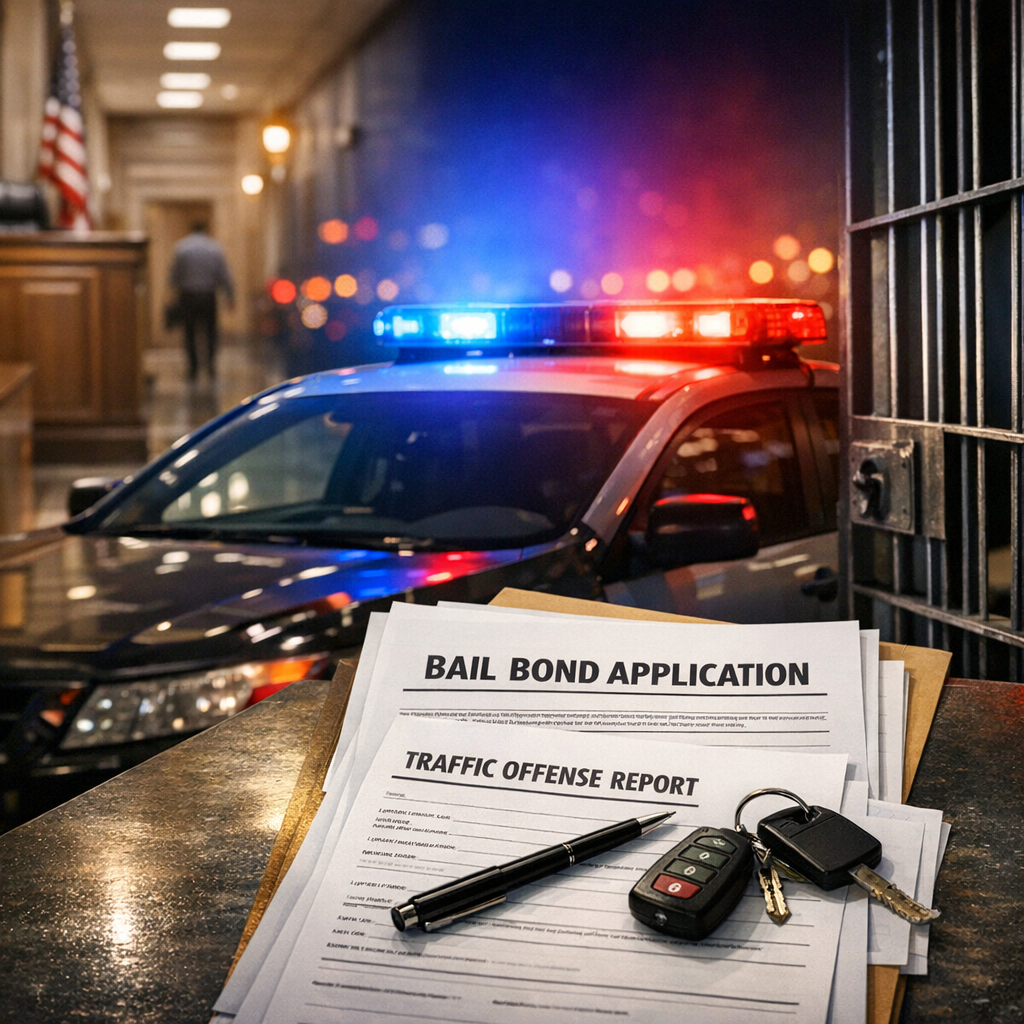
Las Vegas Bail Bonds for Driving Offenses: Fast-Track Release Options After Arrest

Las Vegas Bail Bonds for Driving Offenses: Understanding Your Release Options
Published: October 25, 2026
A driving-related arrest in Las Vegas can quickly turn an ordinary day into a stressful situation. Whether someone is arrested for driving under the influence (DUI), reckless driving, driving with a suspended license, or another traffic-related criminal offense, understanding the available release options can help families respond quickly and confidently.
Las Vegas bail bonds for driving offenses provide a potential pathway to release while a criminal case moves through the Nevada court system. Depending on the charge, arrest circumstances, outstanding warrants, and applicable court procedures, some defendants may qualify for release relatively quickly. Others may need to wait for a judge to determine whether bail is appropriate and, if so, establish the required amount.
Driving offenses can involve different agencies and detention facilities throughout Clark County. Arrests may be made by the Las Vegas Metropolitan Police Department, Nevada State Police, or other local law enforcement agencies. Booking procedures and release timelines vary depending on where the person is detained.
For families seeking immediate assistance, contacting an experienced local bail bond provider can help clarify the process, identify the detention facility, and explain the paperwork and financial requirements associated with a bond.
For information about available bail bond services, call (702) 450-4000. Local assistance is available at 629 S Casino Center Blvd, Las Vegas, NV 89101.
Common Driving Offenses That May Lead to Arrest in Las Vegas
Not every traffic violation results in an arrest. Many routine infractions are handled through citations. However, certain driving offenses can lead to detention, criminal charges, and potential bail requirements. Understanding the nature of the alleged offense is an important first step when exploring release options.
Common driving-related charges that may involve bail considerations include:
- Driving under the influence (DUI): Alcohol-related or drug-related impairment allegations may result in arrest, particularly when officers believe a driver has violated Nevada DUI laws.
- Reckless driving: Allegations involving dangerous driving behavior, excessive speed under circumstances meeting the legal definition, or other conduct that endangers people or property may lead to criminal proceedings.
- Driving with a suspended or revoked license: Certain license-related violations can result in criminal charges, depending on the underlying suspension and applicable Nevada law.
- Hit-and-run offenses: Leaving an accident scene may result in criminal charges, with consequences depending on whether property damage, injuries, or fatalities are involved.
- Driving-related warrants: An outstanding warrant connected to a missed court appearance or unresolved criminal traffic case may result in arrest.
- Repeat or aggravated driving offenses: Prior convictions, serious injuries, or other aggravating circumstances may affect charging decisions and release conditions.
The specific charge matters because bail eligibility and release conditions are not identical across driving offenses. A misdemeanor DUI arrest may involve different procedures from a felony DUI allegation or a serious collision involving injuries.
Families should avoid assuming that a previous bail experience guarantees the same outcome in a new case. Courts consider the current allegations, criminal history, applicable law, and other relevant circumstances before determining release conditions.
Fast-Track Release Options for Driving-Related Arrests
When someone is arrested for a driving offense, families often want to know one thing: How quickly can the person get out of jail? The answer depends on the available release mechanism, booking status, and whether judicial approval is necessary.
Several possible release pathways may apply to qualifying driving-related cases in Las Vegas and Clark County.
- Release on recognizance: Some defendants may be released without posting monetary bail when authorized by the court or applicable procedures. The person must comply with all release conditions and future court appearances.
- Cash bail: When monetary bail is authorized, the required amount may be posted through an accepted payment method, subject to the detention facility’s procedures and applicable court rules.
- Surety bail bonds: A licensed Nevada bail bond agency may arrange a surety bond for an eligible defendant after completing the required application, payment arrangements, and paperwork.
- Judicial release review: Some cases require a hearing or other judicial determination before release conditions can be established or modified.
A fast-track release does not mean skipping required legal procedures. It means preparing the necessary information promptly, identifying the correct detention facility, and using an available release process without avoidable administrative delays.
For example, a family that already knows the defendant’s full legal name, date of birth, booking location, and available case information may be better prepared to begin a bail bond application.
However, a bail bond company cannot guarantee immediate release, override a judicial hold, or determine eligibility for release on its own. The court and detention facility control the applicable authorization and final release procedures.
Call (702) 450-4000 to discuss whether a surety bond may be available for a driving-related arrest.
What Happens Next After Arrest for a Driving Offense?
Understanding what happens after a driving-related arrest can reduce confusion and help families organize the information needed for a potential release. Although individual cases vary, the process generally follows several stages.
Step 1: Arrest and Transportation
Following an arrest, law enforcement may transport the individual to a detention facility for processing. Depending on the arresting agency and circumstances, this may involve the Clark County Detention Center or another authorized facility in the Las Vegas area.
Step 2: Booking and Identification
Booking commonly includes recording identifying information, fingerprints, photographs, alleged charges, and relevant administrative details. Processing times vary with staffing, facility volume, verification requirements, and other circumstances.
Step 3: Bail and Release Eligibility Review
Officials determine whether release is authorized under applicable procedures or whether the defendant must appear before a judge. Outstanding warrants, additional charges, holds, or specific legal restrictions can affect the available options.
Step 4: Bond Application and Processing
If a surety bond is permitted, a licensed bail bond provider can explain the application process. A prospective indemnitor, commonly called a co-signer, may need to provide identification, financial information, and other required documentation.
Step 5: Release and Court Obligations
Once an authorized bond is accepted and all applicable holds and processing requirements are resolved, the detention facility can complete its release procedures. Actual timing remains under the facility’s control.
After release, the defendant must follow court orders, attend required hearings, and comply with any conditions imposed. DUI-related cases may also involve separate driver’s license or administrative proceedings.
Families can help by keeping booking information organized, maintaining communication with the bail agency, and confirming that the defendant understands the importance of every scheduled court appearance.
How Much Do Las Vegas Bail Bonds Cost for Driving Offenses?
One of the most common concerns after a driving-related arrest is the cost of obtaining release. Bail amounts can vary considerably depending on the alleged offense, criminal history, judicial findings, and other factors affecting the case.
There is no single bail amount that applies to every DUI, reckless driving, or suspended-license arrest in Las Vegas. Some defendants may qualify for nonmonetary release, while others may face monetary bail or restrictions requiring additional judicial review.
When a surety bond is available, the bail bond company generally charges a regulated premium for providing the bond. Nevada bail bond premiums and related practices are subject to state insurance laws and regulatory requirements.
The premium is different from the total bail amount. For example, if a court authorizes a monetary bond of $5,000, the agency’s permitted premium is calculated according to applicable Nevada requirements and the terms of the transaction. The premium should not be confused with a refundable cash bail deposit.
Additional financial obligations may arise under a signed bail bond agreement, including obligations connected to collateral or a defendant’s failure to satisfy bond conditions. Any proposed charges and contractual responsibilities should be explained before documents are signed.
Prospective co-signers should understand that signing a bail agreement can create meaningful financial responsibilities. They should review the agreement, ask about collateral requirements, and request clarification of any unfamiliar terms.
A reputable bail bond provider should clearly explain the applicable premium, payment expectations, documentation requirements, and circumstances that may create additional liability.
For current information about driving-offense bail bond costs and available arrangements, contact the Las Vegas office at (702) 450-4000.
Nevada Bail Bond Laws: Understanding NRS 697 and NRS 178
Nevada law establishes rules governing bail bond businesses and the judicial release process. Two important statutory references are Nevada Revised Statutes (NRS) Chapter 697 and NRS Chapter 178. Understanding their different purposes helps families distinguish a bail agency’s responsibilities from decisions controlled by the courts.
NRS 697: Regulation of Bail Bond Professionals
NRS Chapter 697 addresses the regulation of bail agents and related bail bond activities in Nevada. In practical terms, it establishes a legal framework for licensing, professional conduct, and other requirements applicable to people and businesses operating in the bail bond industry.
For consumers, this means a bail bond transaction should be handled through properly authorized professionals who follow applicable state requirements. Families should expect clear explanations of premiums, agreements, collateral arrangements, and relevant contractual obligations.
NRS 178: Criminal Procedure and Pretrial Release
NRS Chapter 178 covers important aspects of Nevada criminal procedure, including provisions concerning bail, release, and court proceedings. These laws help establish how release decisions are made and what conditions may apply while criminal charges remain pending.
Courts may consider legally relevant circumstances when determining whether release is appropriate and what conditions are necessary. A bail bond agency does not have authority to change a judge’s order or eliminate a legally imposed detention requirement.
In driving-related cases, the interaction between criminal charges, judicial release decisions, and detention facility procedures can affect how quickly someone becomes eligible for release.
This article provides general educational information, not legal advice. Nevada laws, court rules, and procedures may change, and case-specific questions about charges, defenses, release restrictions, or legal rights should be directed to a qualified Nevada criminal defense attorney.
Getting Local Bail Bond Help in Las Vegas: Your Next Steps
When a family member is detained after a driving-related arrest, practical preparation can make the bail process easier to navigate. The first priority is confirming where the individual is being held and whether a release amount or other authorization has been established.
Las Vegas driving-offense arrests may involve multiple agencies and facilities. Knowing the correct detention location is important because each facility follows its own intake, verification, and release procedures within applicable legal requirements.
Before contacting a bail bond agency, try to gather the defendant’s full legal name, date of birth, approximate arrest time, detention location, and any available booking or case number. If those details are incomplete, explain what you know so the agency can identify what additional information is needed.
Ask whether the person is currently eligible for a surety bond, whether any holds may prevent release, what documentation a co-signer needs, and which charges or collateral requirements may apply. Do not assume a quoted timeline is guaranteed, because release depends on official processing and legal authorization.
Local assistance can be particularly valuable when families are unfamiliar with Clark County detention procedures or are trying to coordinate paperwork from outside Nevada.
For help understanding available bail bond options for DUI, reckless driving, suspended-license allegations, and other qualifying driving-related arrests, contact the Las Vegas bail bond office at 629 S Casino Center Blvd, Las Vegas, NV 89101.
Call (702) 450-4000 to discuss the arrest, ask about the bond application process, and learn what information is needed to get started.
Fast action can help prevent unnecessary preparation delays, but every release remains subject to Nevada law, applicable court orders, and detention facility procedures. The goal is to understand the available options, complete required paperwork accurately, and prepare for the defendant’s ongoing court obligations.
Frequently Asked Questions
- Can someone get bail after a DUI arrest in Las Vegas?
- Yes, bail or another form of pretrial release may be available after a DUI arrest in Las Vegas, depending on the circumstances. Eligibility can depend on the charges, prior history, outstanding warrants, applicable laws, and court orders. Some defendants may qualify for release without monetary bail, while others may need a surety bond or judicial review. Call (702) 450-4000 to ask about available bail bond services.
- How quickly can someone be released from jail after a driving offense?
- Release timing varies according to booking completion, bail authorization, detention facility procedures, outstanding holds, and whether a court hearing is required. Once release is authorized, having identification, booking details, and bond paperwork ready may help prevent administrative delays. However, no bail bond company can guarantee an exact release time.
- Are bail bonds available for reckless driving charges in Nevada?
- A surety bail bond may be available for a reckless driving arrest when monetary bail is authorized and the defendant meets applicable release requirements. Eligibility depends on the specific allegations, any associated charges, the defendant’s circumstances, and court decisions. A licensed Nevada bail bond provider can explain the bond application process.
- How much does a DUI bail bond cost in Las Vegas?
- The cost depends on the authorized bail amount and the premium permitted under Nevada’s applicable bail bond regulations. The premium paid to a bail bond agency is different from the full bail amount and is generally not refundable. Collateral or additional contractual obligations may also apply. Contact (702) 450-4000 for information about the applicable premium and agreement requirements.
- Can someone get released without paying bail after a traffic-related arrest?
- Yes. Some defendants may qualify for release on their own recognizance or another form of nonmonetary pretrial release. Eligibility depends on applicable Nevada law, court procedures, and the circumstances of the case. A bail bond agency cannot authorize recognizance release or override judicial restrictions.
- What information is needed to start a Las Vegas bail bond application?
- Useful information includes the defendant’s full legal name, date of birth, detention location, booking number if available, alleged charges, and any known bail amount. A prospective co-signer may also need government-issued identification and financial information. Requirements depend on the transaction and the bail bond agency’s underwriting procedures.
- What happens if someone misses court after being released on a bail bond?
- Missing a required court appearance can lead to serious consequences, potentially including a bench warrant, bail forfeiture proceedings, and financial obligations under the bond agreement. The exact consequences depend on the court’s orders and applicable Nevada law. Anyone who has missed a hearing should promptly consult a qualified Nevada criminal defense attorney about their circumstances.
- Where can I get local bail bond assistance for a driving-related arrest in Las Vegas?
- For information about bail bonds for qualifying DUI, reckless driving, suspended-license, and other driving-related criminal cases, contact the local Las Vegas bail bond office at 629 S Casino Center Blvd, Las Vegas, NV 89101. Call (702) 450-4000 to discuss the detention location, available bond information, required paperwork, and next steps.
Need immediate help in Las Vegas? Contact us at (702) 450-4000 or call our office at 629 S Casino Center Blvd, Las Vegas, NV 89101.