
Las Vegas Bail Bonds for Drug Possession, Intent to Sell, and Temporary Bail Decisions

Las Vegas Bail Bonds for Drug Possession and Possession With Intent
A drug-related arrest in Las Vegas can create immediate uncertainty for defendants and their families. Whether the accusation involves simple drug possession, possession with intent to sell, or another controlled substance offense, one of the first concerns is whether the arrested person can be released from custody while the criminal case moves forward.
Understanding how Las Vegas bail bonds for drug possession work can help families prepare for the next steps. Bail decisions may depend on the alleged offense, the defendant’s criminal history, outstanding warrants, public safety considerations, and the circumstances presented to the court.
Drug arrests can occur throughout Clark County, including the Las Vegas Strip, Downtown Las Vegas, residential neighborhoods, and surrounding communities. Depending on the arresting agency and circumstances, defendants may be processed through the Clark County Detention Center or another local detention facility.
Some defendants receive an initial bail amount through applicable court procedures, while others must wait for a judicial determination. Temporary bail decisions can also change after additional information becomes available.
Families seeking help can contact a local bail bond agency to understand the bonding process, required paperwork, and available payment arrangements. For assistance with Las Vegas drug possession bail bonds, call (702) 450-4000. A bail bond professional can explain the process without making promises about judicial decisions or release times.
Drug Possession vs. Possession With Intent to Sell in Nevada
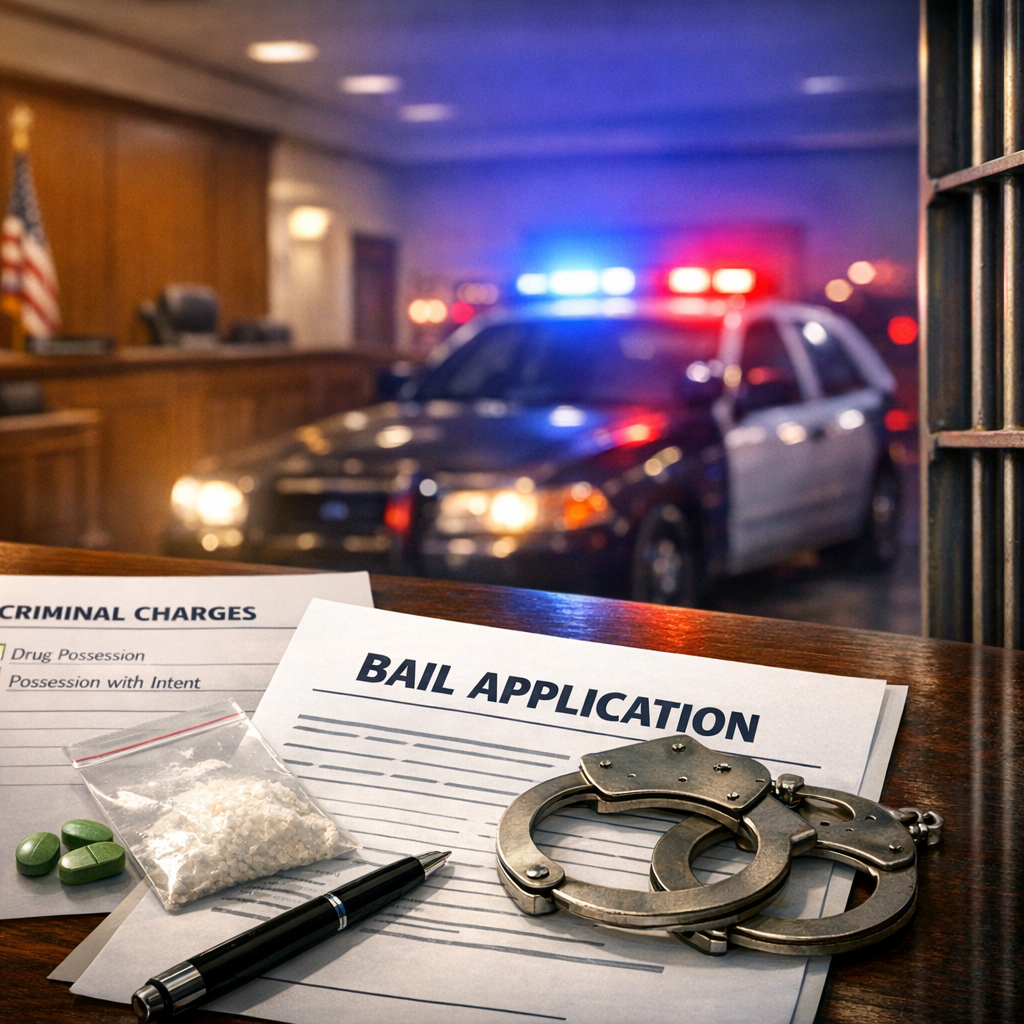
Not every Nevada drug arrest involves the same criminal allegation. The distinction between possession of a controlled substance and possession with intent to sell can affect charging decisions, potential penalties, and how the court evaluates release conditions.
Simple possession generally concerns allegations that an individual knowingly or intentionally possessed a controlled substance without lawful authorization. Nevada’s controlled substance laws include NRS 453.336, which addresses unlawful possession of certain controlled substances. The applicable classification and penalties depend on the substance, quantity, prior qualifying convictions, and other statutory circumstances.
Possession for the purpose of sale is a separate allegation addressed by Nevada law, including NRS 453.337 and NRS 453.338, depending on the substance involved. Prosecutors may consider the quantity of drugs, packaging materials, communications, financial evidence, and other circumstances when determining whether to pursue a possession-for-sale charge.
Possession with intent does not necessarily require proof that a completed sale occurred. However, an arrest allegation is not a conviction, and the prosecution must establish the applicable elements of the charged offense.
For bail purposes, more serious allegations may lead to closer examination of the defendant’s circumstances. Nevertheless, the charge alone does not establish a universal bail amount.
Families should avoid assuming that every drug possession case qualifies for immediate release or that every intent-to-sell allegation requires prolonged detention. The court’s actual orders and applicable Nevada procedures control the available options.
How Temporary Bail Decisions Work in Las Vegas Drug Cases
Temporary bail decisions often arise during the early stages of a criminal case, before the court has fully addressed all release conditions. Following an arrest, an initial bail amount may be established through applicable procedures, or the defendant may remain in custody pending a judicial review.
In Nevada, pretrial release decisions generally involve considerations such as the seriousness of the allegations, the defendant’s criminal history, prior court appearances, community connections, and potential risks to public safety or future court attendance.
A judge may authorize release on personal recognizance, impose conditions of release, require a financial bond when legally appropriate, or order continued detention when authorized by law. Nevada law also recognizes constitutional and statutory protections that govern when bail may be denied and what procedures must apply.
Temporary bail amounts are not necessarily final. A later court hearing may result in modified release conditions or a different financial requirement. A defendant’s attorney may request judicial review when appropriate.
In drug possession and possession-for-sale cases, families should confirm the current bail status rather than relying exclusively on an amount reported immediately after arrest.
A licensed Las Vegas bail bond agent can help determine whether a bond is currently authorized and explain the administrative steps involved in posting it. However, a bail bond agency cannot independently lower bail, override a detention order, or guarantee that a judge will approve release.
For updated bonding assistance, contact (702) 450-4000 and provide the defendant’s identifying information and known detention location.
What Happens Next After Arrest for Drug Possession in Las Vegas?
After a drug-related arrest, several administrative and judicial steps may occur before a defendant becomes eligible for release. Understanding this sequence can reduce confusion and help family members gather useful information.
Step 1: Booking and Identification
The arresting agency transports the individual to an appropriate detention facility. Booking generally includes identity verification, photographs, fingerprints, property processing, and entry of the alleged charges into the custody system. Processing times vary with staffing, facility activity, and individual circumstances.
Step 2: Confirming Custody and Bail Status
Once booking information becomes available, family members can attempt to verify the detention location, booking number, listed charges, and current release status. An initial amount may appear in custody records, but additional holds or court orders can affect eligibility.
Step 3: Judicial Review When Required
If release is not immediately available, the defendant may need to appear before a judge. The court can evaluate lawful release conditions, including whether financial security or other restrictions are appropriate.
Step 4: Arranging an Authorized Bail Bond
When a qualifying bond is permitted, the family or another responsible person may contact a licensed bail bond agency. The agency explains the premium, possible collateral requirements, contractual obligations, and documents needed to begin processing.
Step 5: Release Processing and Court Compliance
Posting a bond does not produce instant release. Detention staff must complete their procedures, and outstanding holds may delay or prevent discharge. After release, the defendant must follow all applicable court orders and appearance requirements.
For help understanding the bond process after a Las Vegas drug arrest, call (702) 450-4000.
Understanding Bail Bond Costs, Collateral, and Release Delays
Families frequently ask how much a bail bond costs for drug possession or possession with intent to sell in Clark County. The answer depends partly on the amount established by the court and the type of bond authorized.
A bail bond is generally a financial guarantee provided through a licensed surety arrangement to secure a defendant’s required court appearances. The person arranging the bond usually pays a regulated premium rather than depositing the entire bail amount directly with the court.
Nevada bail bond premiums are subject to state regulation. A licensed agency should explain the applicable premium, permitted charges, and payment terms before documents are signed. A premium is generally compensation for the bonding service and should not be confused with a refundable cash bail deposit paid directly to a court.
Depending on the circumstances and underwriting requirements, an agency may request collateral or a financially responsible indemnitor. Anyone considering signing a bail bond agreement should understand the obligations involved, including potential financial exposure if the defendant fails to comply with bond conditions.
Even after a bond is accepted, release timing remains uncertain. Booking completion, jail processing, verification requirements, additional criminal matters, warrants, and immigration or other lawful holds may affect the outcome.
No responsible agency should guarantee release within a specific number of minutes or hours. The practical goal is to identify the correct custody information, confirm bonding eligibility, and complete authorized paperwork accurately.
Families can call (702) 450-4000 to discuss available Las Vegas bail bond services and the documentation that may be required.
Nevada Bail Bond Laws: NRS 697 and NRS 178 Explained
Nevada has specific laws governing bail bond businesses and criminal pretrial release. Understanding the difference between these legal frameworks helps families recognize what a bail agent can do and what decisions belong to the courts.
NRS Chapter 697 regulates Nevada bail agents and related bail bond activities. It addresses licensing, professional responsibilities, and requirements applicable to the bail bond industry. In practical terms, this framework helps establish standards for businesses that arrange surety bail bonds and interact with customers seeking release assistance.
NRS Chapter 178 contains important Nevada criminal procedure provisions, including rules concerning bail and pretrial release. These laws help govern how courts evaluate release, impose conditions, and address bail-related matters during criminal proceedings.
For a person arrested on drug possession or possession-for-sale allegations, the distinction is important: NRS 178 concerns judicial criminal procedure, while NRS 697 concerns regulation of bail bond professionals.
A licensed bail agent may assist with an authorized bond, but only the appropriate judicial authority can make or modify court-controlled release decisions. Bonding services do not determine guilt, dismiss charges, or replace criminal defense representation.
Federal constitutional protections, Nevada constitutional provisions, court rules, and other applicable laws may also influence pretrial release decisions. Particular facts and procedural requirements can change how these protections apply.
This article provides general information, not legal advice. Defendants should consult a qualified Nevada criminal defense attorney about charges, constitutional rights, detention challenges, or requests to modify bail conditions.
Get Local Las Vegas Bail Bond Assistance for Drug Charges
When someone is arrested for drug possession or possession with intent to sell, reliable information matters. Families may be dealing with an unfamiliar detention system, incomplete booking records, changing bail status, and urgent questions about what can happen next.
A local Las Vegas bail bond office can assist with the practical bonding process once release eligibility and the required financial conditions are confirmed. This may include reviewing available custody information, explaining bond documents, discussing permitted payment arrangements, and coordinating authorized bond submission.
For local assistance, contact the Las Vegas bail bond office at 629 S Casino Center Blvd, Las Vegas, NV 89101. The office is located in Downtown Las Vegas, providing a convenient point of contact for families dealing with criminal matters in the Las Vegas area.
Before calling, gather the defendant’s full legal name, date of birth, approximate arrest time, suspected detention facility, and booking number if available. If the court has already established a bail amount, having that information can also help the agency explain potential bonding requirements.
Remember that every case is different. Drug type, alleged quantity, charging classification, prior criminal history, outstanding holds, and judicial release orders may affect whether a bond can be posted.
Need help with Las Vegas bail bonds for drug possession, possession with intent, or a temporary bail decision? Call (702) 450-4000. Ask about current bonding procedures, required documentation, and available next steps. Prompt communication can help families prepare, but release remains subject to court authorization and detention facility processing.
Publication date: November 17, 2026. This information is educational and does not establish an attorney-client relationship or guarantee a particular bail or release outcome.
Frequently Asked Questions
- Can someone get bail for drug possession in Las Vegas?
- Many defendants arrested for drug possession in Las Vegas may qualify for pretrial release, but eligibility depends on the applicable law, the allegations, the defendant’s circumstances, and judicial orders. Release may involve personal recognizance, financial bail, or other conditions. Some defendants must wait for a court hearing before a release determination is made. Call (702) 450-4000 to ask about the process for arranging an authorized bail bond.
- Is bail higher for possession with intent to sell than for simple possession?
- Possession with intent to sell can involve more serious criminal allegations than simple possession, potentially influencing how a court evaluates bail and release conditions. However, Nevada does not apply one universal bail amount to every case in either category. The court may consider the alleged offense, criminal history, public safety, appearance risk, and other legally relevant circumstances.
- What is a temporary bail decision in a Nevada drug case?
- A temporary bail decision is an initial or interim determination about a defendant’s release status while criminal proceedings continue. It may involve an initial bail amount, release conditions, or detention pending further judicial review. Depending on applicable law and procedure, a court may later reconsider or modify release conditions. A bail bond agency cannot independently change a judge’s order.
- How long does it take to get released after posting bail in Las Vegas?
- Release times vary depending on booking completion, detention facility staffing, verification procedures, outstanding holds, and other administrative or legal requirements. Posting an authorized bond does not guarantee immediate discharge. A bail agent may explain the bonding steps and available status information, but cannot guarantee a specific release time.
- How much does a Las Vegas drug possession bail bond cost?
- The cost generally depends on the court-authorized bail amount and the premium permitted under Nevada’s bail bond regulations. Additional contractual requirements, such as collateral or an indemnitor, may apply. Before signing, request a clear explanation of the premium, any permitted charges, payment terms, and financial responsibilities. For information about available bonding arrangements, call (702) 450-4000.
- Can a bail bondsman reduce bail for a possession-with-intent charge?
- No. A bail bond agent cannot independently reduce the amount established by the court or overturn a detention decision. An attorney may be able to request judicial review or modification of bail when permitted by law. The judge or other authorized judicial officer determines whether a change is appropriate.
- What information should I have before calling a Las Vegas bail bond company?
- Helpful information includes the defendant’s full legal name, date of birth, approximate arrest date and time, detention facility, booking number, alleged charges, and any known bail amount. You can still call if some details are unavailable. The agency may explain how to locate publicly available custody information and what documents are needed if bonding is authorized.
- Where can I find local bail bond assistance for a drug arrest in Las Vegas?
- For local Las Vegas bail bond assistance, visit 629 S Casino Center Blvd, Las Vegas, NV 89101, or call (702) 450-4000. Ask about drug possession bail bonds, possession-with-intent allegations, current bonding requirements, and temporary bail decisions. A licensed bail bond professional can assist with the bond process when permitted, while a Nevada criminal defense attorney can provide legal advice about the criminal case.
Need immediate help in Las Vegas? Contact us at (702) 450-4000 or call our office at 629 S Casino Center Blvd, Las Vegas, NV 89101.