
Assault and Battery Arrests in Las Vegas: Bail Bonds, Costs, and What Happens Next

Assault and Battery Arrests in Las Vegas: Understanding Your Bail Options
Published November 4, 2026.
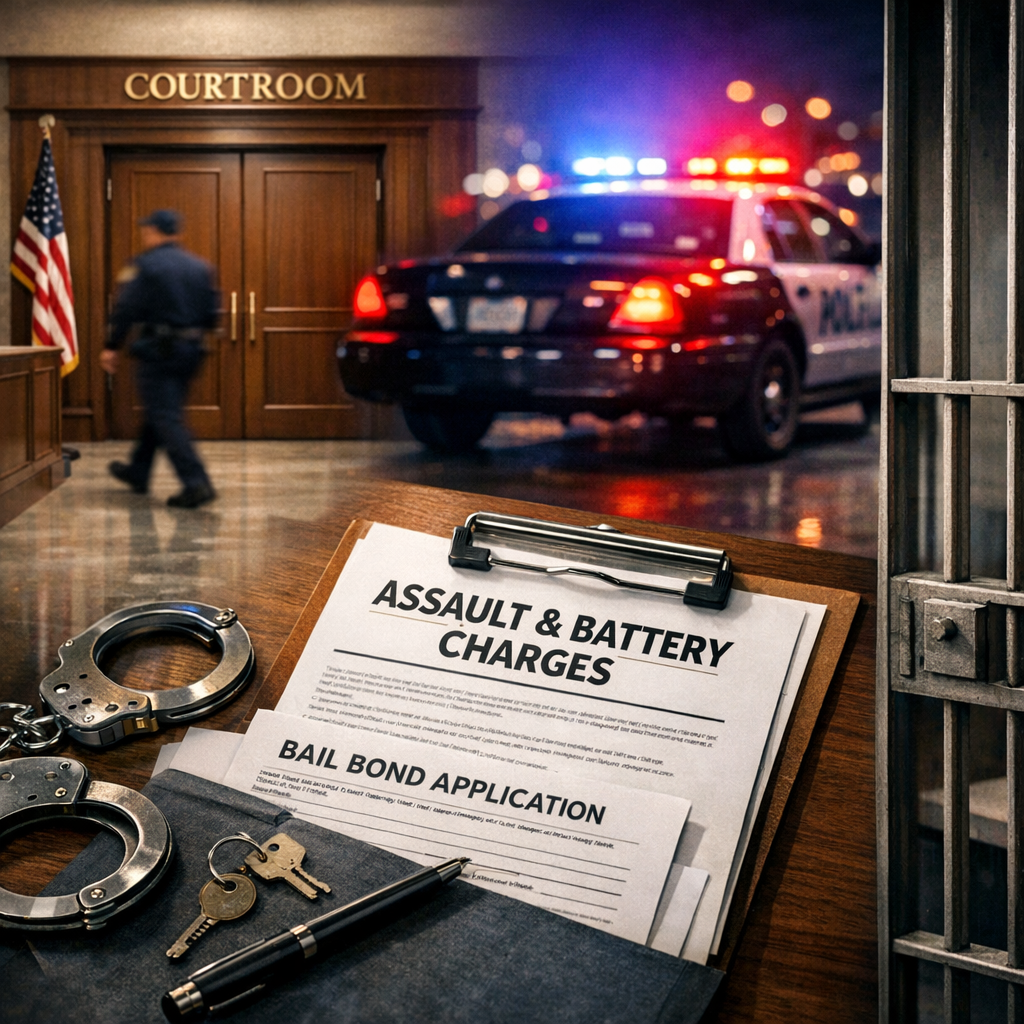
Assault and battery arrests in Las Vegas can happen suddenly, leaving families worried about where their loved one is being held, how much bail might cost, and when release may be possible. Whether an arrest follows an argument, a disturbance at a casino, an incident on the Las Vegas Strip, or a confrontation at a private residence, understanding the bail process can help families make informed decisions during a stressful situation.
Nevada law treats assault and battery as separate offenses. Assault generally involves unlawfully attempting to use physical force against another person or intentionally placing someone in reasonable apprehension of immediate bodily harm. Battery generally involves the willful and unlawful use of force or violence against another person. The circumstances surrounding an arrest can significantly affect the potential charges and release conditions.
For individuals arrested in Las Vegas, bail may provide an opportunity for release while the criminal case continues. However, release is not automatic, and the court may impose conditions or require a hearing before bail is available.
If someone you care about has been arrested, obtaining accurate custody information is an important first step. For assistance understanding available Las Vegas bail bond options, call (702) 450-4000. Our office is located at 629 S Casino Center Blvd, Las Vegas, NV 89101, conveniently situated near downtown Las Vegas legal and detention facilities.
Common Assault and Battery Charges in Clark County
Not every assault or battery arrest involves the same allegations. Nevada criminal statutes distinguish between different circumstances, and those distinctions can affect the seriousness of the charge, potential penalties, and how a judge approaches release.
Under Nevada law, assault is primarily addressed by NRS 200.471, while battery is primarily addressed by NRS 200.481. Depending on the alleged conduct, charges may involve misdemeanor or felony offenses. Additional statutes may apply when allegations involve domestic relationships, protected individuals, or other specific circumstances.
Common situations that may result in an assault or battery arrest include:
- Simple assault: Allegations involving an attempted unlawful use of force or conduct creating reasonable apprehension of immediate bodily harm.
- Simple battery: Allegations involving unlawful physical contact or force without circumstances that elevate the offense.
- Battery constituting domestic violence: Allegations involving certain qualifying relationships under Nevada domestic violence laws.
- Battery causing substantial bodily harm: Allegations involving serious injuries that may support more severe charges.
- Assault or battery involving a deadly weapon: Cases involving alleged weapon use that can carry substantially greater consequences.
- Incidents involving protected occupations: Certain allegations involving officers, healthcare providers, or other protected individuals may trigger enhanced penalties.
Police may initially book someone under a particular charge, but the prosecuting authority ultimately determines which charges to pursue. The seriousness of the allegations does not, by itself, establish guilt.
For families arranging bail, the immediate priority is usually determining the confirmed booking information, whether bail has been set, and whether any legal restriction prevents immediate release.
What Happens Next After an Assault or Battery Arrest in Las Vegas?
After an assault or battery arrest in Las Vegas, the next steps depend on the arresting agency, the alleged offense, and the detention facility handling the booking. Understanding the general sequence can reduce confusion and help families avoid unnecessary delays.
The process commonly includes these stages:
- Arrest and transportation: Officers take the individual into custody and transport them to an appropriate detention facility.
- Booking: Jail personnel record identifying information, allegations, fingerprints, and other required information. Medical screening and property processing may also occur.
- Custody verification: Family members may be able to confirm the person’s location and booking status through the appropriate detention facility.
- Bail determination: Depending on the charge and circumstances, a release amount may be available under applicable procedures, or a judge may need to determine release conditions.
- Bond arrangements: When a surety bond is permitted, a licensed bail bond agency may help an eligible applicant arrange the required bond.
- Release processing: After the facility receives and accepts the necessary authorization and paperwork, jail personnel complete their release procedures.
- Court appearances: The defendant must comply with scheduled hearings and all applicable release conditions.
Individuals arrested by the Las Vegas Metropolitan Police Department may be taken to the Clark County Detention Center, although custody locations vary. Other agencies and municipal jurisdictions may use different facilities.
Release timing is never guaranteed. Booking delays, judicial review, outstanding warrants, holds, and facility workload can all affect the process. Families should verify the current custody location and avoid assuming that payment alone guarantees immediate release.
How Much Does a Las Vegas Assault and Battery Bail Bond Cost?
One of the first questions families ask after an arrest is how much money they need to arrange release. The answer depends on the bail amount authorized for the specific case, whether a surety bond is permitted, and the terms of the bail bond agreement.
When a court sets monetary bail, the defendant may have options that include posting the full amount through an authorized method or arranging a surety bond through a licensed bail bond company. Not every defendant qualifies for every release option, and some cases require additional judicial approval.
In Nevada, bail bond premiums are regulated. A commonly applicable premium is 15% of the bond amount, subject to Nevada law and applicable regulatory requirements. For example, a $10,000 bond at a 15% premium would involve a $1,500 premium. This example is illustrative and does not predict the bail amount or final charges in any particular case.
Additional financial obligations may arise depending on lawful fees, collateral requirements, financing arrangements, and the written agreement. Ask for a clear explanation of the total financial commitment before signing.
A bail bond premium is generally the charge for the surety service rather than a refundable deposit. Collateral, when required, serves a different purpose and should be addressed in the agreement.
For current information about available payment arrangements and bonding requirements, contact our Las Vegas office at (702) 450-4000. A representative can explain the agency’s process after the relevant bail amount and custody information are confirmed.
Special Considerations for Domestic Violence and Felony Battery Arrests
Some assault and battery arrests involve additional legal restrictions that can change the release process. This is especially important when the allegations involve domestic violence, serious injuries, a deadly weapon, or a person with an existing criminal case.
Nevada has specific procedures for arrests involving battery constituting domestic violence. Under applicable circumstances, NRS 178.484 restricts release for a period following arrest unless the required judicial review and statutory conditions are satisfied. Families should not assume that a standard bail amount overrides a mandatory detention period or other release restriction.
A judge may also impose conditions intended to protect individuals or ensure future court appearances. Depending on the case, those conditions could include restrictions on contact, travel, weapons possession, or visits to certain locations.
Felony battery allegations may receive additional scrutiny because of the seriousness of the alleged conduct, the possibility of substantial bodily harm, or concerns about public safety. A court may consider the defendant’s circumstances and applicable legal standards when determining release.
Outstanding warrants, probation or parole holds, immigration-related custody issues, and separate criminal matters can also complicate release. A bail bond generally addresses the specific bond obligation for which it is issued and does not automatically resolve unrelated holds.
Because these cases can involve significant legal consequences, defendants should consult a qualified Nevada criminal defense attorney regarding their rights, charges, and court obligations. A bail bond agency can explain bonding logistics but cannot replace legal representation or guarantee that release will be authorized.
Nevada Bail Bond Laws: Understanding NRS 697 and NRS 178
Las Vegas bail bond services operate within Nevada’s legal and regulatory framework. Two important chapters are NRS 697 and NRS 178. Understanding their different purposes helps families recognize the distinction between a bail bond company’s responsibilities and the court’s authority.
NRS 697 governs Nevada bail agents and bail bond business practices. It establishes requirements relating to licensing, surety arrangements, premiums, records, and other aspects of regulated bail bond operations. In practical terms, this chapter helps determine how licensed bail professionals may conduct business and what obligations apply when providing bonding services.
NRS 178 addresses criminal procedure, including important bail and pretrial release rules. Its provisions address matters such as eligibility for release, judicial decisions about bail, and certain restrictions or conditions that may apply before trial. NRS 178.484 is particularly relevant when evaluating release procedures and restrictions following certain arrests.
These laws perform different functions. A licensed bail bond agency may facilitate a permitted surety bond, but it cannot independently decide whether a defendant is legally eligible for release, remove a court-imposed restriction, or override a detention requirement.
Additionally, bail is not a determination of innocence or guilt. Its purpose is connected to the defendant’s release obligations while the criminal proceedings continue.
Legal rules, court orders, and individual circumstances control each case. This article provides general educational information as of November 4, 2026, and is not legal advice. Anyone needing guidance about criminal charges, defenses, or specific release conditions should speak with a Nevada-licensed attorney.
Get Help With Assault and Battery Bail Bonds in Las Vegas
When someone is arrested for assault or battery, families often face several urgent questions at once. Where is the person being held? Has bail been set? Can a bond be posted? What documents are needed? How long might release take?
Working with a local Las Vegas bail bond office can help families understand the administrative steps involved in arranging an authorized bond. Local familiarity is particularly useful when identifying the appropriate detention facility and coordinating the information needed to begin the process.
Our office is located at 629 S Casino Center Blvd, Las Vegas, NV 89101, in downtown Las Vegas. We assist callers seeking information about bail bond arrangements for eligible cases in the Las Vegas area, including arrests involving misdemeanor assault, misdemeanor battery, and more serious allegations when bonding is legally permitted.
Before calling, it helps to gather the arrested person’s full legal name, date of birth, approximate arrest time, and known detention location. If a booking number, bail amount, or court case number is available, keep that information nearby. Missing details do not necessarily prevent an initial inquiry.
During the conversation, ask about the bond process, applicable premiums, acceptable payment methods, identification requirements, potential collateral, and any information needed before paperwork can be prepared. Make sure you understand the responsibilities of anyone signing as an indemnitor or cosigner.
Need assistance with an assault or battery arrest in Las Vegas? Call (702) 450-4000 to discuss available bail bond options and the next administrative steps. Release remains subject to applicable Nevada law, court authorization, detention facility procedures, and any outstanding holds.
Acting promptly to confirm custody information and understand the applicable process can help your family prepare for what comes next.
Frequently Asked Questions
- Can someone get bail after an assault or battery arrest in Las Vegas?
- Many individuals arrested for assault or battery may be eligible for pretrial release, but eligibility depends on the charges, applicable Nevada law, judicial decisions, and any outstanding holds. Some cases require a court hearing or involve mandatory release restrictions. A licensed bail bond agency can explain bonding options after the person’s custody status and authorized bail amount are confirmed.
- How much does a bail bond cost for battery in Las Vegas?
- The cost depends on the authorized bond amount and the applicable premium. Nevada regulates bail bond premiums, and a commonly applicable premium is 15% of the bond amount. For example, a $5,000 bond at 15% would have a $750 premium. Other lawful charges or collateral requirements may apply depending on the agreement. Request a written explanation of all financial obligations before signing.
- How long does it take to get someone released from the Clark County Detention Center?
- There is no guaranteed release timeline. Processing depends on booking completion, bail eligibility, court authorization when required, facility workload, and whether the person has additional holds or restrictions. Even after an authorized bond is accepted, jail personnel must complete their release procedures.
- Can a person arrested for domestic battery in Nevada be released immediately?
- Not necessarily. Nevada law includes specific release restrictions for certain domestic violence arrests. NRS 178.484 may require a detention period or judicial review before release is permitted. The applicable requirements depend on the circumstances and current law. Posting a bond does not override statutory restrictions or court orders.
- What information do I need to arrange a Las Vegas bail bond?
- Useful information includes the arrested person’s full legal name, date of birth, detention location, booking number, and authorized bail amount. A bail bond agency may also request identification, contact information, and financial details from the person arranging the bond. Requirements vary by case and agreement.
- What happens if someone misses court after being released on a bail bond?
- Missing a required court appearance can result in serious consequences, including a bench warrant, possible bond forfeiture, and additional financial obligations under the bail bond agreement. The court determines the legal consequences, and the surety may have rights and responsibilities under Nevada law. Anyone who misses court should contact a qualified attorney promptly.
- Can a bail bond company help with felony battery charges?
- A licensed bail bond company may be able to arrange a surety bond for an eligible felony battery case when the court authorizes that form of release. However, certain felony allegations can involve additional hearings, conditions, or restrictions. A bail agent cannot guarantee release or override a judicial decision.
- Where can I get help with assault and battery bail bonds in Las Vegas?
- For information about available Las Vegas bail bond services, call (702) 450-4000 or contact the office at 629 S Casino Center Blvd, Las Vegas, NV 89101. Have the arrested person’s name and available booking information ready. A representative can explain the bonding process, applicable costs, and documentation requirements. Legal questions about the criminal case should be directed to a Nevada-licensed attorney.
Need immediate help in Las Vegas? Contact us at (702) 450-4000 or call our office at 629 S Casino Center Blvd, Las Vegas, NV 89101.